

Will 2026 be the year the much-anticipated “future of work” arrives in a flash? Not likely. But it will mark a pivotal shift for people leaders as HR evolves from a compliance-driven function to a core driver of business adaptability.
To fulfill the mission, people leaders must:
- Deeply understand the business, its challenges and opportunities, what success looks like and how we intend to get there.
- Make sure the organization fills the right seats by crafting talent strategies that support, enable and accelerate business strategies.
- Execute talent management practices—acquisition, development and rewards—that make that talent strategy a reality.
The HR function must also drive business adaptability by cultivating and empowering leadership. When the business needs to adapt, it is on team leaders to articulate the rationale for the change and ensure that stakeholders understand and can adjust.
See also: CHROs, here are 5 opportunities to lead the future of work
The convergence of workforce models, talent markets and technology will continue to reshape how companies hire, develop and sustain people, with a few critical forces driving this shift:
Structuring the backbone of work
AI is widely seen as essential, but it is still not clear that the industry has coalesced around clearly high ROI or use cases. In fact, 43% of organizations report leveraging AI in HR tasks (up from 26% in 2024), and 82% of HR professionals report using AI in their daily work, underscoring the rapid uptake in this sector, but only 30% have received comprehensive, job-specific training on it.
As hiring, performance, learning and compensation systems begin to rely on AI as part of their core operations, the need for strong governance, ethical design and transparency will grow. Moving AI from a standalone tool to the underlying infrastructure of work will require careful planning and proper training for HR leaders.
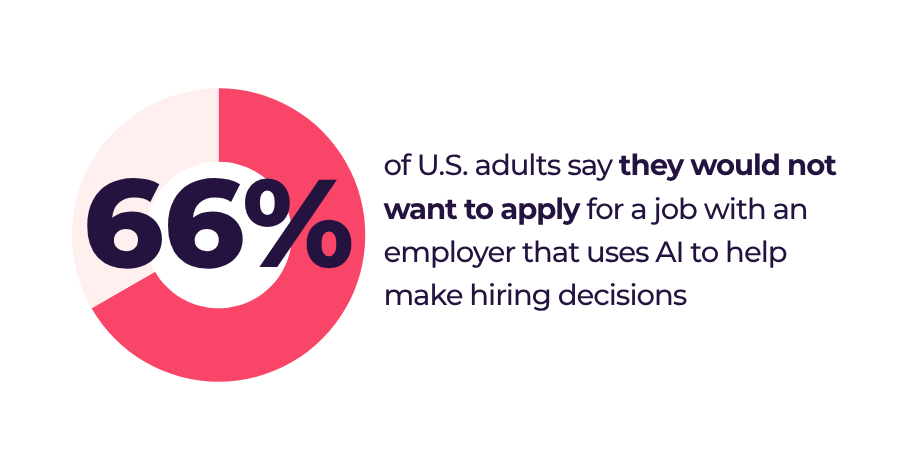
Today, AI agents conducting interviews, onboarding, training and coaching feel like a detraction rather than an enhancement to candidate and employee experience. Using AI for performance evaluation, promotion or termination decisions seems more likely to ingrain bias than eliminate it—and it also increases the risk of legal challenges.
The guidance? Start with the business problem, experiment with curiosity and ensure the value outweighs the risk before scaling.
We approach AI by asking what outcome we are trying to achieve and identifying whether AI can accelerate that outcome reliably by running controlled pilots and validating the return (and risk) before full roll-out. Only then do we embed the solution into the framework.
Feedback hierarchy will shift
Building a strong feedback culture has always been a challenge, and 2026 may mark the end of traditional hierarchies where leaders offer criticism disguised as feedback. Over 75% of organizations reported they are adopting a skills-based approach and emphasizing continuous planning, and a McKinsey study showed companies relying solely on traditional annual cycles for feedback have experienced declining employee satisfaction, ushering in a shift toward dynamic conversations and continuous feedback loops.
In practice, this means the healthiest companies will be those where employees can challenge decisions, raise concerns or make suggestions that are actually heard. Real-time conversation will replace rigid review cycles as feedback becomes part of how work gets done, not an afterthought.
With this in mind, we have completely overhauled our approach to performance management. We have introduced peer and upward feedback and are rolling out continuous growth and performance check-ins. We are enabling this with ongoing training for employees and managers on how to communicate directly and push positively. Keeping in mind that culture and behavioral change start from the top, we have conducted multiple 360 feedback sessions with our C-suite and senior leadership to build and cascade this muscle.
Quality over quantity for talent in the new era of HR
Global talent mobility has clearly changed how we hire. Shifting from volume hiring to strategic talent density will be a defining competitive advantage in 2026, as many organizations seem to still struggle linking workforce capabilities with business goals.
While 71% of companies are actively driving workforce planning, only a minority of organizations link workforce planning to longer-term skill needs.
To address this, HR leaders can identify the handful of roles where high-impact skills matter most; map existing skills and gaps; deploy internal mobility and upskilling programs; and move away from fixed job descriptions toward dynamic skills-based frameworks. Driving talent density where the company needs to win is the heart of this value-add.
We engaged in this strategy as we expanded our presence in India, where talent pools are massive and the relative labor cost is attractive. We targeted high-impact talent with cross-functional alignment and achieved expanded development capability at roughly a third of the investment that would have been required otherwise. Clearly, a high ROI and a good example of talent density aligned to business strategy.
Intertwining global and local cultures
The increased access to global hiring also means opening conversations around globalization versus localization when building culture. Should we have identical approaches across geographies to have consistency for the organization, or let there be local autonomy due to local cultural nuances and regulations? Personally, I think it is a false dichotomy.
An organization is going to want coherence across its geographies in terms of values, identity and atmosphere, as opposed to a federation of entities related only in the sense that they have a common government. Expecting to have complete parity across offices ignores the reality of how employee expectations and labor competition vary per geography.
We have a “g-local” culture, where we have common frameworks and principles that provide a connective tissue across sites, but leeway for local culture and practices to implement those principles and frameworks in a tailored way. This duality allows us to maintain identity, fairness and coherence across our hundreds of markets, while letting local teams tailor talent practices, total rewards and work-model design to reflect local labor markets and expectations.
Why the next era of HR involves less ‘programs,’ more ‘products’
The people function is poised for its biggest evolution yet: completing the shift from a back-office operation to a true strategic growth partner. To get there, HR leaders must move beyond thinking in terms of “programs” and start designing employee experiences and talent systems as “products.”
This shift requires adopting agile ways of working, testing quickly, iterating often, gathering feedback and continually improving. It also means becoming deeply customer-centric, delivering products and experiences that employees, managers and leaders genuinely need and that make their work easier, faster and more effective.
In 2026, HR is no longer defined by policy. It is defined by its ability to drive business performance, productivity and profitability.