


As 2025 draws to a close, business leaders have laid out plans for the year ahead, and they need five-star CHRO leadership. From navigating AI disruption to managing executive transitions and driving organizational transformation, HR leaders say their demands have never been more strategic and complex.
Based on HR Executive’s reporting, here is what’s topping the executive agenda for HR leaders heading into 2026.
The C-suite’s HR wish list
3 ‘wicked messes’ facing CEOs—and how HR can clean them up
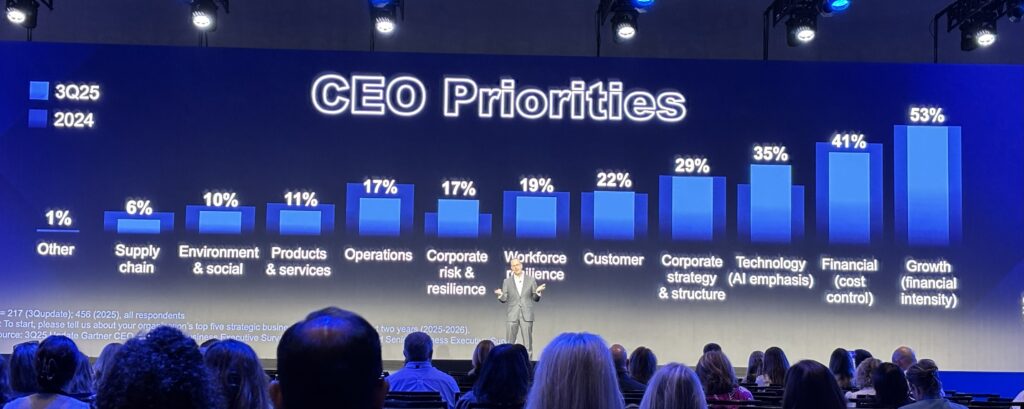
CEOs are increasingly relying on HR to address urgent challenges tied to growth, technology and workforce transformation in a volatile global environment. As CEO confidence declines and workforce issues lose visibility, executives expect CHROs to step in as strategic enterprise leaders and drive measurable impact.
4 strategies to fix your ineffective CEO succession planning
With over half of C-suite leaders planning to leave within two years, boards and CEOs are putting succession planning at the top of HR’s to-do list. Executives want CHROs to lead with the business case for long-term value, start planning early with future-focused approaches, leverage objective data and build credibility through understanding the business. This ask is shifting succession considerations from reactive exit planning to proactive leadership strategy.
Half of CEOs want new AI roles. What IBM says HR can do to prepare
CEOs are betting big on AI returns, with 54% hiring for roles that didn’t exist a year ago and 85% expecting positive ROI by 2027. To meet this mandate, executives need HR to invest in role-specific AI training, develop both technical skills like data literacy and human skills like critical thinking and track actual workplace effectiveness to ensure employees can deliver on AI’s promise.
CHRO leadership in 2026
Should HR pros fear layoffs? 3 tech CEOs debate AI’s impact on jobs
The C-suite is grappling with a critical question for HR. Will AI displace workers or fundamentally reshape roles? Executives expect HR to lead this transition. That includes shifting from specialization to generalization, building trust through clear AI accountability and developing comprehensive training programs.
The power of partnership: How CEOs and HR leaders can lead transformation together
CEOs view HR as a valued partner, but building that relationship requires CHROs to truly understand the business, empower the workforce to achieve company goals, maintain frequent transparent communication and be thoughtful about building foundations before innovation. The most successful CEO-CHRO partnerships demonstrate that executives need HR leaders who can step in on high-stakes business matters.
Board prep for CHROs: How to show up as a strategic business leader
Boards don’t want compliance updates or backward-looking metrics; they want assurance that talent is being managed as strategically as capital. CEOs and directors expect CHROs to present clear roadmaps that show how talent will evolve with growth, complete with measurable milestones and forward-looking projections that invite strategic dialogue.
4 important realities shaping HR’s ability to lead transformation
CEOs have elevated CHROs into powerful C-suite roles. However, several realities are shaping HR’s ability to deliver—including balancing growth demands with long-term workforce planning, addressing the AI skills gap, reinvigorating culture change efforts and developing cross-functional enterprise leadership skills that combine business acumen with people expertise.
CEO priorities for HR teams
HR efficiency benchmarks: the key to boosting business outcomes
As CEOs prioritize growth while CFOs tighten budgets, the C-suite needs HR to justify investments through concrete benchmarks. Executives want to understand HR spend not just to compare against peers, but to assess HR services as strategic initiatives that support business objectives.
What it will take to be a CHRO in 2026 and beyond
The new breed of CHRO masters three domains: data analysis, tech fluency and people skills. With 40% of HR leaders uncertain about AI strategy and three-quarters dissatisfied with their tech stacks, the C-suite expects CHROs to become sophisticated technology buyers.
Walmart, Apple CEOs are reportedly stepping down. Are more big-name departures coming?
Major CEO transitions are pointing to a trend of shorter tenures. As a result, boards are making succession planning a top priority. They are also expecting CHROs to lead the effort as soon as a new CEO takes office. They want the focus to be on future business needs, not past leadership models. Succession is no longer a one-time event. It is an ongoing, strategic process.