


Culture is no longer “how it feels to work here.” It is how organizations compete.
Insurance is one of the industries where Blu Ivy Group has built deep, proven expertise — partnering with leading insurance, banking, and investment-backed organizations across Canada and the United States.
In these highly regulated, trust-based environments, employer brand is not about attraction alone. It is about leadership trust, clarity, and consistency, especially during periods of growth, integration, or transformation.
Blu Ivy Group works with executive and operating leaders to ensure culture and employer brand function as management tools, not messaging initiatives alone.
For insurance and financial services organizations, employer brand is a strategic asset that shapes execution quality, leadership effectiveness, and long-term enterprise value.
In the latest episode of Blu Threads Conversations, Blu Ivy Group Co-Founders Leandra Harris and Stacy Parker sit down with Keri Fraser, Chief People Officer at Westland Insurance Group, to explore what happens when culture stops being an HR initiative and becomes a strategic growth engine.
This conversation goes beyond engagement scores and values statements. It examines how leadership behaviour, employer brand, accountability, and employee experience connect directly to performance, reputation, and long-term business results.
➣ Listen to the full episode on YouTube
Who is This For:
This blog is written for COOs, CHROs, and executive talent leaders in insurance and financial services who are responsible for performance, risk, and leadership effectiveness, not just employer branding or HR programs.
Culture As a Strategic Driver, Not A Side Initiative
Keri Fraser shares that Westland’s newly launched five-year strategy — the “2030 Level Up Plan” — places cultural evolution at the center of business planning, not as a supporting HR stream.
The ambition isn’t simply to be a “great place to work.” It is to build a higher performing, more accountable organization while deliberately protecting the care, trust, and belonging that defines Westland’s identity.
What is notable is how this shows up. Culture is embedded into strategic drivers, leadership priorities, and decision-making frameworks, so leaders are expected to weigh not only financial and operational outcomes, but also cultural impact.
Leandra highlights a broader shift Blu Ivy Group is seeing across the U.S. and Canada: culture is increasingly understood as a business lever shaping execution quality, leadership credibility, internal trust, and sustainable financial performance.
➣ Culture is no longer the outcome of strategy. It is the infrastructure of strategy.
Redefining Kindness: Accountability As a Form of Care
One of the most defining moments in the episode is Keri’s reframing of kindness.
As Westland grew nationally, kindness could no longer mean accommodation or avoidance. It had to evolve into clarity, consistency, and responsibility. In other words, care that supports performance.
This shift included:
- clearly redefining leadership expectations
- embedding people and culture measures into executive and leader scorecards
- formally linking behaviour, engagement, and leadership effectiveness to performance and compensation
- introducing national operating standards to replace fragmented regional practices.
The goal wasn’t rigidity; it was fairness, clarity, and trust. Consistency made it easier to lead, easier to hold accountability conversations, and easier for employees to understand what proper leadership looks like.
Stacy reinforces what Blu Ivy Group consistently sees in culture performance work: high-trust cultures are not built on comfort. They are built on clear expectations, courageous leadership, and dependable systems.
➣ Kind cultures do not avoid hard conversations. They enable them.
Where Culture Becomes Real: Turning Intent Into Operating Practice
Across the conversation, one theme becomes clear: culture only creates impact when it is translated into everyday leadership behaviour and operating rhythm.
Keri outlines five ways Westland has done this.
- The organization publishes a company-wide engagement action plan following each survey cycle. It is visible to all employees, refreshed quarterly, and positioned as a leadership accountability document, not an HR artifact. Employees can track progress, see ownership, and hold leaders responsible for follow-through.
- Westland has built a strong executive communication cadence. Leaders show up frequently and visibly through town halls, videos, updates, and storytelling. The consistency of the message matters as much as the message itself. Reinforcing priorities, explaining decisions, and closing the loop on feedback.
- They’ve invested heavily in equipping managers. The Leadership Lounge serves as a real-time resource hub with tools on coaching, change leadership, inclusion, and team engagement. Rather than relying only on episodic leadership training, managers are supported in the moments when culture is delivered.
- Westland actively studies its internal “bright spots.” Leaders who are achieving both strong engagement and strong business results are interviewed, showcased, and used as practical models for others. Their behaviours are surfaced, shared, and translated into actions that other leaders can adopt.
- Finally, when rolling out the “Level Up” strategy, Westland created role-specific toolkits to help managers connect enterprise priorities to daily work. Insurance advisors, leaders, and support teams are not just told where the company is going; they’re supported in understanding what that strategy means for their own decisions, performance, and growth.
Leandra emphasizes that execution and clarity consistently surface in workforce data as primary drivers of trust, and yet they remain among the least intentionally designed aspects of culture.
➣ Culture scales through leadership systems, not slogans.
Employer Brand as Alignment, Not Attraction
When the conversation turns to employer brand, Keri offers a crucial reframing: a strong employer brand is not about appealing to everyone; it is about creating honest alignment.
Westland’s employer brand work has focused on clarifying who the organization is, what it values, and where it is going so that people can make informed decisions about whether they belong there.
Their strategy centres on:
- real employee storytelling
- visible leadership participation
- internal pride before external promotion
- and consistent linkage between EVP pillars and lived experience.
This has included ongoing storytelling initiatives, internal and external campaigns featuring real employees, and leader involvement in sharing and activating the employer brand, not delegating it to HR or marketing alone.
Stacy connects this to a broader shift Blu Ivy Group sees in employer brand consulting: organizations are placing less emphasis on applicant volume and more emphasis on quality of hire, credibility, advocacy, and experience alignment.
➣ Your employer brand is not what you say. It’s what your organization consistently enables.
The Future: Culture, Skills, AI, and Human Infrastructure
Looking ahead, Keri speaks about her interest in talent marketplaces and skills-based mobility, creating systems that allow people to move, grow, and contribute across organizations based on capability and aspiration rather than static roles.
She also reflects on how AI will intensify the need for clarity, fairness, and leadership credibility. As work becomes more automated and data-driven, the human experience of work becomes more defining, not less.
This is where Blu Ivy Group continues to focus its advisory work: helping organizations build the culture, employer brand, and leadership reputation needed to perform in environments shaped by transparency, technology, and constant change.
What This Means For HR, Leaders And Culture Owners
For those shaping people strategy, this episode surfaces clear imperatives:
- Design culture as enterprise infrastructure, not an HR initiative
- Equip managers as culture carriers, not message relays
- Measure leadership behaviour alongside business outcomes
- Use employer brand to create alignment, not oversell
- Build governance, operating systems, and feedback loops
- Prepare for skills-based, AI-enabled workforce models now.
Why This Matters for Employer Brand
As reputation becomes real-time and talent decisions become increasingly values- and experience-driven, organizations need more than positioning.
They need culture architecture.
This is the work Leandra Harris and Stacy Parker lead every day: helping organizations move from culture intention to culture capability.
➣ Watch the full episode on YouTube
How Does an Employer Brand Agency Help an Insurance Employer with Performance?
In insurance and banking, employer brand work looks different than it does in less regulated or faster-moving industries. Leaders are balancing talent attraction with trust, stability, transformation pace, and reputation — all under constant scrutiny from regulators, customers, and employees.
An employer brand agency with insurance expertise helps leaders use culture and employer brand as management tools, not messaging initiatives, to:
- attract high-caliber talent in a sector competing with technology, fintech, and adjacent financial services employers
- maintain execution discipline and leadership trust amid continuous transformation, cost pressure, and regulatory change
- equip middle leaders with the clarity and momentum needed to sustain pace as workforce fatigue and change saturation rise
- elevate reputation and customer loyalty in an era where AI and automation are expanding — and human experience has become the differentiator
- signal leadership credibility and operational confidence to employees and candidates in trust-driven markets
- when done well, employer brand reduces hiring friction, supports consistent execution, and reinforces confidence in how the organization manages its culture internally and externally.
About Our Guest: Keri Fraser
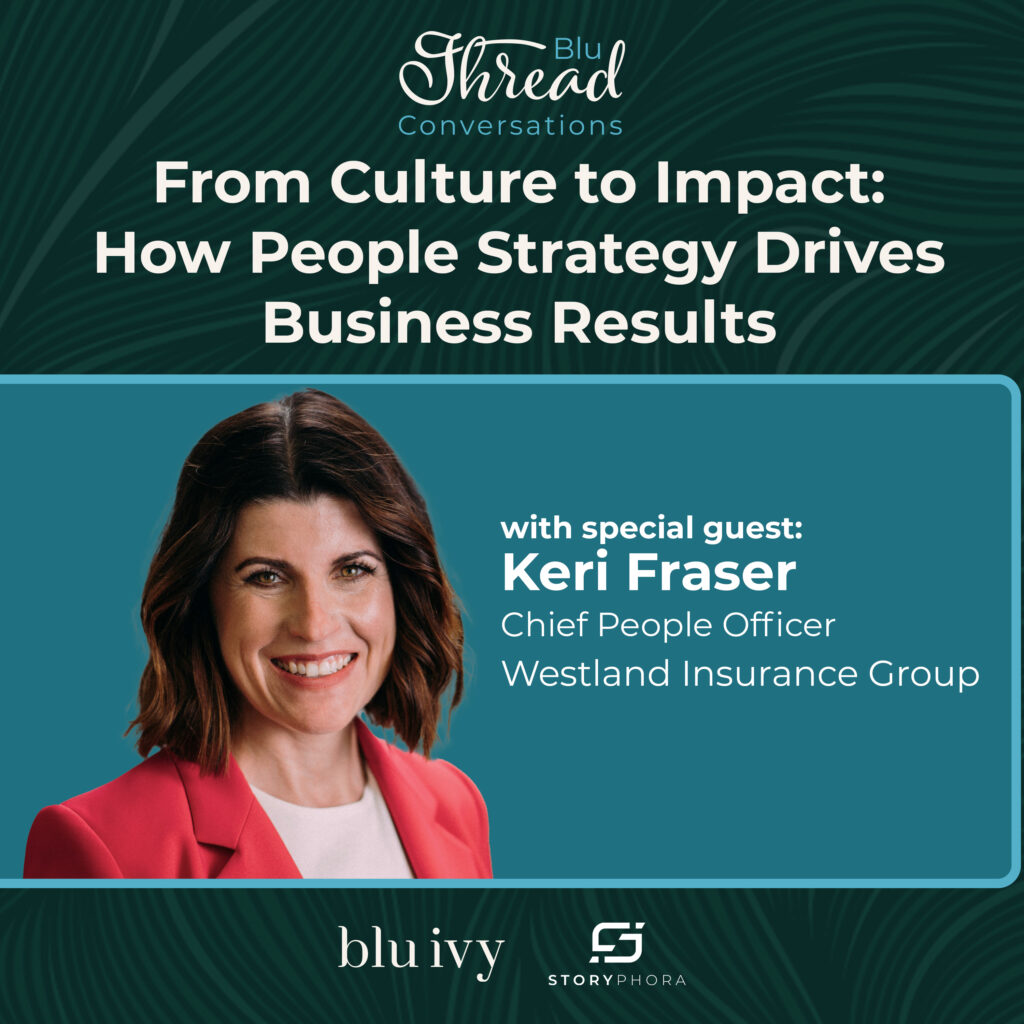
Keri Fraser is Chief People Officer at Westland Insurance Group, Canada’s largest and best-reviewed insurance provider. With more than 20 years of experience, Keri is recognized for building inclusive, accountable, high-performance cultures that support growth, belonging, and leadership credibility.
About Blu Ivy Group
Blu Ivy Group is a globally recognized employer brand, culture, and reputation consultancy, helping organizations across Canada, the United States, and worldwide define, activate, and embed their culture narrative, leadership reputation, and employer trust strategy.
For over a decade, Blu Ivy has partnered with leading organizations, boards, and private equity firms to connect people, purpose, and performance – aligning culture, leadership behavior, employer brand, and reputation to drive measurable business value.
Our expertise spans employer brand strategy, culture narrative development, reputation leadership, employee value proposition (EVP) development, and benchmarking. We help organizations listen deeply, communicate authentically, and lead confidently in a world where culture and reputation have become the true drivers of business growth.
To learn more, visit bluivygroup.com