

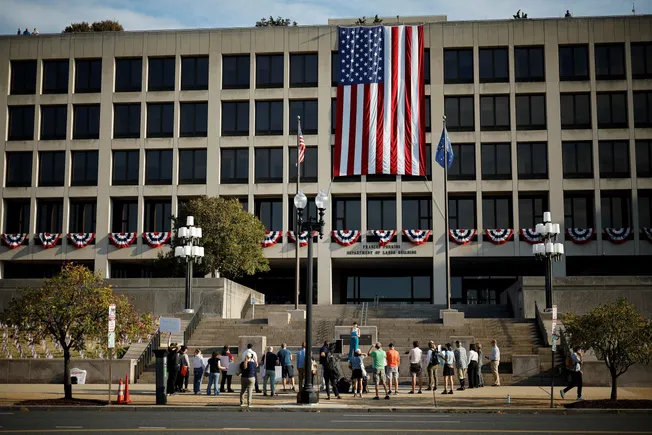
The U.S. Department of Labor kicked off 2026 with a slew of opinion letters, including two clarifying how employers should proceed in two separate scenarios involving the Family and Medical Leave Act.
School closures
In the first letter, DOL Administrator Andrew Rogers responded to an inquiry about how less than a full week’s school closure — due to inclement weather, for example — impacts the amount of leave a school employee uses under the law.
Because the FMLA entitlement is based on workweeks, Roger wrote, the amount of leave deducted would depend on the type of leave the employee is taking. If a worker has requested leave on an intermittent or reduced-schedule basis, the law prohibits a reduction “beyond the amount of leave actually taken,” he said. However, a worker taking a full workweek may still have the entire week deducted, despite not having been expected to work on a day or set of days.
“For example, if an eligible employee needs FMLA leave each Tuesday afternoon for physical therapy, but the school is closed all day on Tuesday due to inclement weather and the employee is not required to report for duty, the employer school should not deduct time for that day from the employee’s FMLA entitlement,” Rogers wrote. On the other hand, “if the employee was on FMLA leave for Monday through Friday of a week, but the school is closed on Tuesday, the employee would use a full week of FMLA leave despite not being required to report to work on Tuesday.”
The specific reasons for the closure and whether or not it was planned would not change this analysis, Rogers said.
Traveling to appointments
A second employer asked whether intermittent FMLA leave should be used to cover a worker’s time needed to travel to and from medical appointments — either for themselves or a qualifying family member. The writer provided the example of a regular 45-minute appointment that occurs monthly, requiring an hour’s drive to and from the doctor’s office.
“When an eligible employee travels to or from a health care provider for a medical appointment regarding the employee’s serious health condition, he or she may take FMLA leave not only for the actual appointment, but also the time traveling to or from the appointment,” Rogers clarified. The same applies to appointments of qualifying family members.
However, Rogers said, FMLA-protected leave “does not encompass travel to or from, or stops for, other unrelated activities,” including going to the library or going grocery shopping, for example.
Rogers further noted that while employers can require medical certifications to demonstrate the need for FMLA leave, providers are not expected to know or furnish information related to travel time.