

As 2026 sits on the horizon, the return-to-office debate clunks along. Meanwhile, global employee engagement levels fell to around two in 10 last year, according to Gallup’s 2025 State of the Global Workplace report—only the second decline in 12 years. The drop cost the world economy $438 billion in lost productivity.
Many companies are closing out 2025 by rolling out hard-line return-to-office mandates; think four- or five-day office weeks. But with compliance lagging and employee satisfaction slipping, the move is sparking backlash. Big names like Paramount and JPMorgan Chase are leading the charge. Paramount, for example, told staff to return five days a week or take severance, a strategy that cost the company $185 million in Q3.
On the other hand, companies that stick with full flexibility often struggle with collaboration, cultural cohesion and the cost of unused real estate.
But the workplace challenge runs deeper than where people sit. Employee wellbeing is declining alongside engagement, creating what Deloitte research identifies as a critical gap: Eighty percent of organizations say worker wellbeing is important for success, yet only 12% feel ready to address it effectively.
A growing number of organizations are testing a different path: Stop mandating. Start designing work that employees want to do, and workspaces that employees actually want to use.
‘Well, how well is that working?’
“We’ve seen a couple of approaches in the marketplace—you have to be in three days a week or you have to be in five days a week. Well, how well is that working?” says Bob Cicero, who leads workplace experience at Cisco and has spent seven years rethinking how the tech company uses its offices. “Our view was, how do we make space a magnet?”
It’s a simple question with complex implications for HR leaders. If the office must compete with the comfort and convenience of working from home, what does it need to offer? And who in the organization should own that challenge?
The answers emerging from organizations tackling this question suggest HR leaders may need to rethink not just office design, but organizational structure, data sources and what “workplace experience” really means.
Space and employee experience with HR in charge
Here’s a question for HR leaders: If workplace experience is critical to talent strategy, why does real estate typically report to the CFO?
It’s a structural issue more organizations are reconsidering. When real estate is managed purely as a cost center, decisions prioritize lease terms and square footage over employee needs. But if physical space is meant to attract talent and enable collaboration, shouldn’t it sit with the people function?
Some companies are making that shift. At Cisco, the real estate leader now reports to the chief people officer rather than finance. “We made a fundamental shift in terms of thinking about real estate—it’s really about people. It’s not about a CFO function anymore,” Cicero says. “And so we do see more of that occurring in the marketplace.”
Deloitte’s research supports this structural change. Its analysis found that organizations with more mature wellbeing strategies are those where HR is the primary owner. The key is that whoever owns wellbeing must also have the ability to influence the design of work itself, not just offer programs adjacent to it.
The reporting structure matters because it changes what questions get asked and what metrics matter. Under finance, the focus is cost per square foot. Under HR, the conversation shifts to employee satisfaction, utilization patterns and whether space supports the work that actually needs to happen.
That doesn’t mean finance isn’t involved when real estate still requires budget oversight. But when organizations treat workplace experience as a people strategy first, Cicero notes, “it’s a very different conversation.”
Data-driven real estate
Before redesigning office space, most HR leaders look at badge swipe data or survey employees about their preferences. That’s useful, but it’s not the whole picture.
The most valuable data about how people actually work may already exist in your organization—you just need to know where to look.

“Those capabilities come from the IT side of the house, not from an HR system or from a real estate system,” Cicero says.
IT infrastructure, such as wireless networks, collaboration tools and meeting room technology, generates continuous data about space utilization, meeting patterns, even environmental conditions like temperature and air quality. However, many organizations aren’t tapping into it for workplace planning.
Curious what this looks like in your organization? Ask your IT team what data they’re collecting about:
- meeting room occupancy and usage patterns
- desk and space utilization throughout the day
- peak collaboration times versus focus work times
- environmental factors (air quality, temperature, lighting)
- which spaces consistently go unused
This granular view reveals patterns surveys can’t capture. You might discover that conference rooms sit empty most afternoons, that employees cluster in certain areas and avoid others or that temperature complaints spike in specific zones.
One useful framework: Think about work in distinct modes rather than just “office time.” Cicero describes five work modes worth tracking: brainstorming, learning, socializing, decision-making and focus work. Understanding when and where each happens helps you design space that supports actual work patterns rather than assumptions about how people should work.
Read more | Hybrid work policies: No room for ‘one size fits all’
The hybrid equity problem
Even with better data and design, offices face a challenge. As long as some employees work remotely, in-person meetings risk becoming two-tiered experiences. Remote participants struggle to hear, can’t read body language and often get talked over by the room.
This “hybrid equity” problem undermines one of the main reasons to bring people together—effective collaboration.
The solution requires thinking about physical space and technology as integrated, not separate. Cicero describes the goal as “distance zero,” making location irrelevant to someone’s ability to contribute.
“Physical and virtual coming together, there shouldn’t be a difference in terms of where you are and how you feel in terms of your contribution to that meeting. Everyone should have a face in the meeting,” he says.
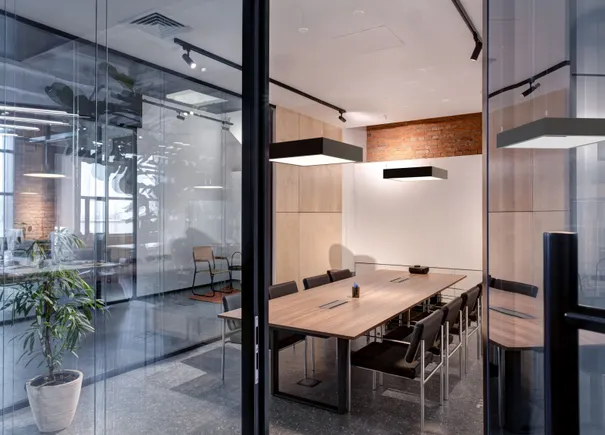
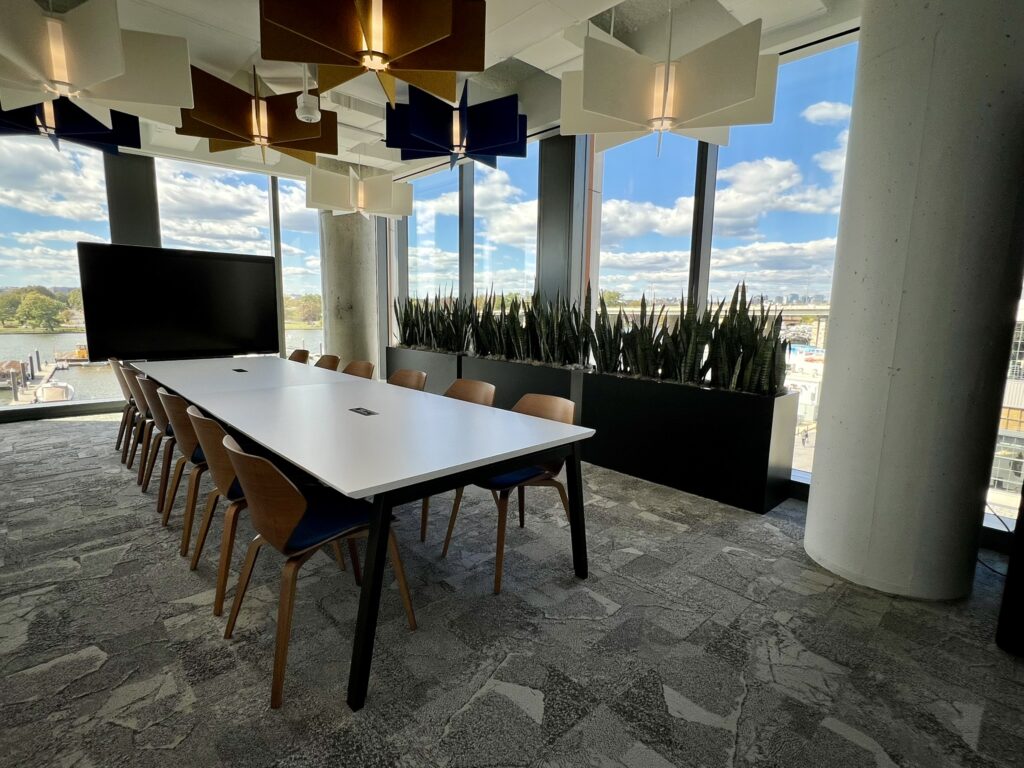
That principle drives specific design choices. In some of Cisco’s redesigned offices, meeting tables are angled so remote participants can see everyone in the room clearly on camera. Technology gets built into the space from the start rather than added afterward. Even furniture placement considers sightlines for video participants.
The point isn’t that every organization needs the same setup. It’s that half-measures don’t work. If your hybrid meetings feel awkward, if remote participants routinely miss nonverbal cues, if the room forgets about people on the screen, then employees will wonder why they bothered coming in.
True hybrid equity means remote participants should feel as present as anyone in the room. That requires intentional design, not just a webcam propped on a conference table.
What matters to employees
The workplace wellness conversation has evolved significantly. What started as occupational health and safety has expanded to encompass physical, mental and financial wellbeing. Yet, according to Deloitte research, 61% of organizations aren’t measuring wellbeing’s impact on performance at all.
The real opportunity, Deloitte argues, lies in integrating wellbeing into the design of work itself, not just offering adjacent wellness programs. This means addressing how, when, where and by whom work gets done, rather than simply providing meditation apps or gym memberships.
The pandemic made indoor environmental quality a front-of-mind concern. “COVID pushed the health and wellness story forward,” Cicero says. Ask employees what they value about workplaces now, and the answers increasingly go beyond desks and conference rooms, says Cicero. They want to know about air quality. Natural light. Sustainability practices. Whether the space considers neurodiversity needs.
The sustainability angle matters too, particularly for younger employees. When organizations publish energy usage data and demonstrate environmental commitments through building certifications like LEED or WELL, “employees are like, ‘Wow, like, [the employers] really care,’ ” Cicero notes.
This presents an opportunity for HR leaders. Many of these factors—air quality sensors, environmental controls, sustainability reporting—already exist in modern buildings. The challenge is making employees aware of them and connecting workplace quality to the talent value proposition.
If you’re asking employees to commute, show them the office environment is actually better for their health and wellbeing than their home setup, says Cicero. Then have the data to prove it.
What success looks like
How do you know if workplace redesign is working? The metrics matter, according to Cicero.
“People are voting and they’re voting with their feet,” Cicero says. He says that means whether employees come in repeatedly by choice, not just to satisfy a policy. But HR leaders should look beyond surface-level attendance. Revealing questions include:
- Are employees coming in for the right reasons? (Collaboration, not just compliance)
- Do satisfaction scores specifically address workplace experience?
- Are teams actually using collaborative spaces, or clustering in individual work areas?
- Do employees recommend the office to candidates during recruiting?
- What’s the pattern over time—initial novelty bump or sustained use?
The honest assessment may reveal that making offices genuinely attractive requires sustained investment. Upgrading meeting technology, redesigning spaces for different work modes, adding wellness features—none of it is cheap or quick.
That’s a difficult message for some executive teams. It might seem easier to simply tell people they must come in. But the organizations finding traction aren’t the ones issuing the strictest mandates, according to Cicero. They’re the ones making offices worth the commute through better data, intentional design and treating workplace experience as a strategic people function rather than a cost to be managed.
With engagement declining and wellbeing falling, the stakes are higher than many executives realize. Research suggests employees would take pay cuts to maintain remote work flexibility. In that environment, the office needs to offer something meaningfully better than home to attract and retain the talent needed for future success.
“This can’t go on forever. We can’t be post-pandemic forever. Things will have to eventually balance out,” Cicero notes.